



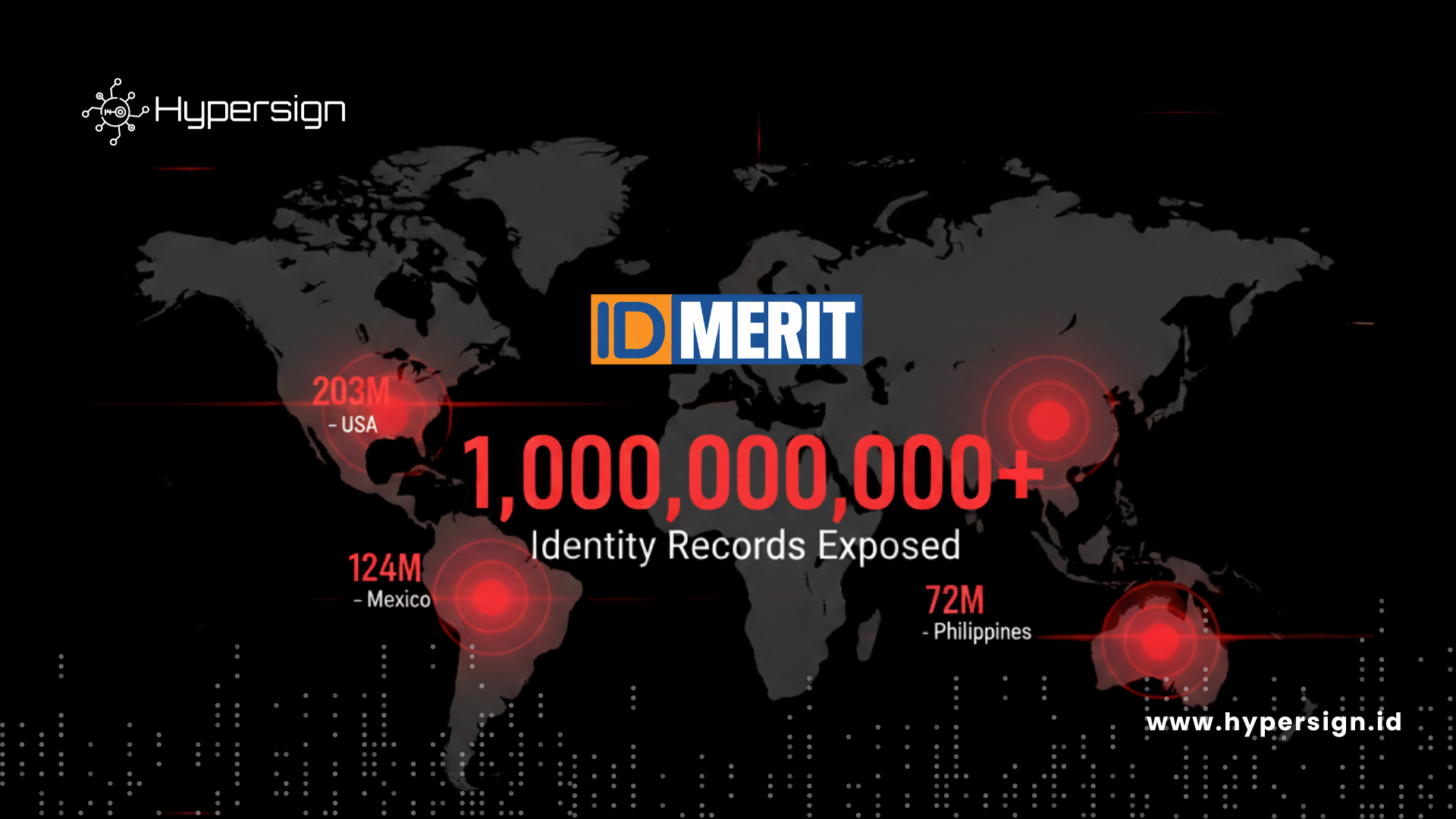
A compliance provider meant to protect identity has reportedly exposed over one billion personal records across 26 countries.
The breach linked to IDMerit included highly sensitive, structured identity data:
- National ID numbers
- Full legal names
- Dates of birth
- Residential addresses
- Phone numbers
- Structured telecom-linked metadata
This was not a password dump.
This was compliance-grade identity data. Structured. Labeled. Verification-ready.
And that changes everything.
This Is Not Just a Breach. It Is an Infrastructure Failure.
According to the IBM Cost of a Data Breach Report 2024:
- The average global data breach now costs 4.45 million dollars
- Identity-based breaches take the longest to detect and contain
- Organizations without automation face significantly higher financial impact
But cost is not the real story.
The real story is architectural risk.
Modern KYC vendors operate under growing regulatory pressure. Crypto regulations, MiCA frameworks in Europe, AMLD7 directives, and global FATF guidelines require rigorous identity verification. To comply, many vendors collect and centralize vast volumes of personal data across jurisdictions.
That aggregation creates a single, irresistible target.
A centralized identity database is not just infrastructure. It is a high-value asset in the fraud economy.
And once breached, the damage is permanent.
You can reset a password.
You can revoke an API key.
You cannot rotate your national ID number.
You cannot change your date of birth.
Structured Data Is a Weapon
According to the Federal Trade Commission, identity theft remains one of the most reported categories of fraud in the United States.
Now consider what structured KYC data enables.
Attackers are not working with random scraped emails. They are gaining access to:
- Cleanly labeled national ID fields
- Verified physical addresses
- Telecom metadata tied to real individuals
- Enrichment flags indicating risk status
This is operational identity intelligence.
With AI-driven automation, attackers can:
- Launch precision phishing campaigns referencing real personal data
- Execute SIM swap attacks using telecom-linked metadata
- Open accounts on financial platforms using verified identifiers
- Bypass secondary identity verification layers
- Automate fraud campaigns at industrial scale
When compliance databases are exposed, attackers do not need to assemble fragmented datasets. They inherit a pre-organized identity warehouse.
The Industry’s Uncomfortable Truth
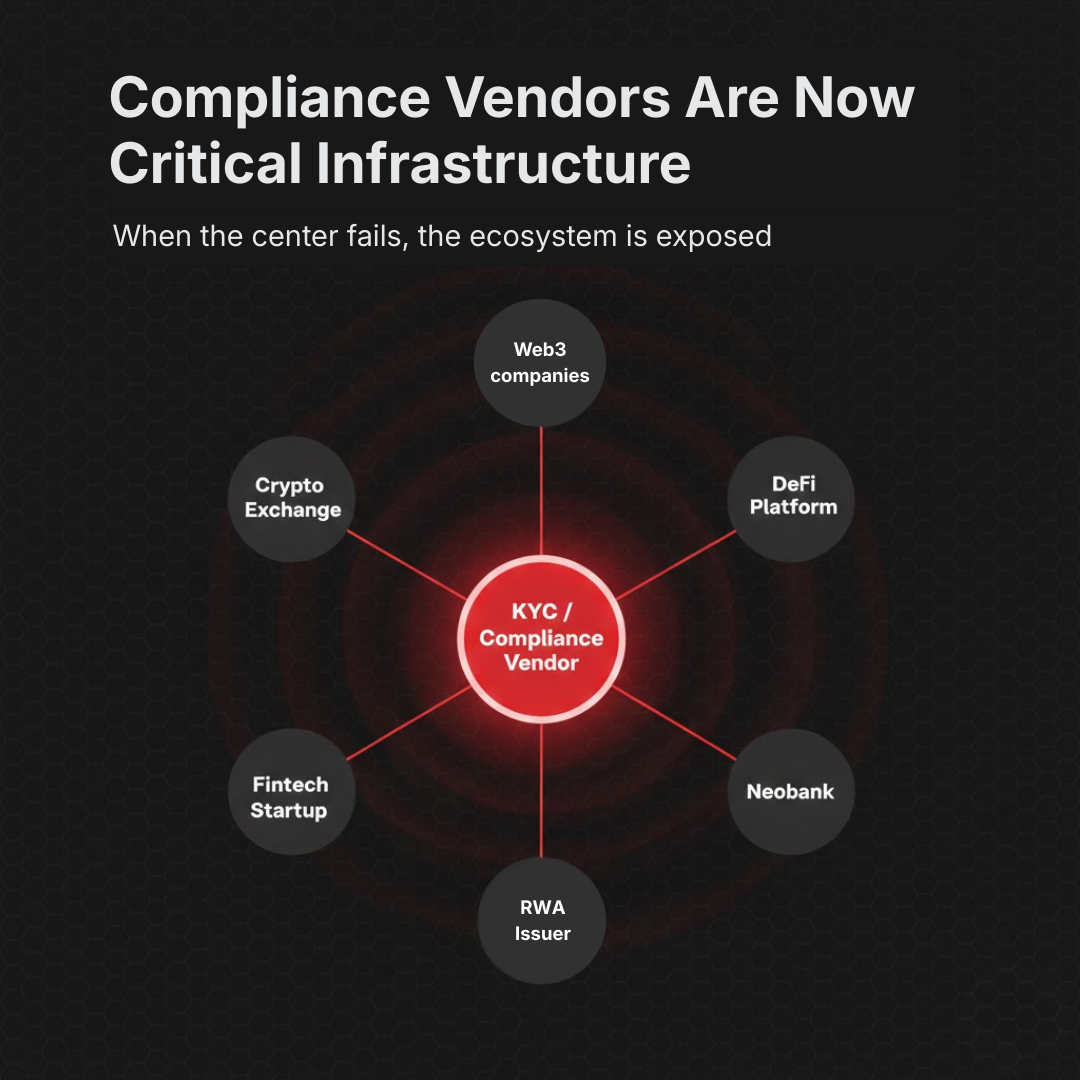
Compliance vendors have quietly become critical infrastructure for the digital economy.
They now underpin:
- Crypto exchanges
- DeFi platforms
- Fintech startups
- Real-world asset issuers
- Neobanks
Yet many still operate on a Web2 data architecture model:
Collect everything.
Store everything.
Retain indefinitely.
That model was built for an earlier internet.
It is now colliding with an AI-powered fraud economy where automation lowers the barrier to sophisticated attacks and structured data multiplies exploitability.
Breaches of this scale will not be the last.
They will become normal.
The Real Question: Is Your KYC Provider a Risk Multiplier?
Compliance is meant to reduce fraud risk.
But if your compliance partner:
- Stores raw identity documents long-term
- Centralizes multi-country identity datasets
- Recollects documents across platforms
- Lacks reusable credential architecture
- Aggregates enrichment data into permanent profiles
Then your onboarding infrastructure may be your greatest vulnerability.
KYC should reduce exposure.
It should not concentrate it.
The Hypersign Alternative: Compliance Without Identity Honeypots
Hypersign is built on a fundamentally different premise.
Compliance must minimize data concentration. Not maximize it.
Instead of hoarding raw personal documents, Hypersign enables:
- Privacy-first identity workflows
- Reusable verifiable credentials
- Self-sovereign identity principles
- Cross-chain KYC and KYB
- Regulation-ready automation aligned with MiCA, AMLD7, and FATF
Verification should happen once.
Credentials should be reusable across platforms.
Raw identity documents should not live indefinitely in centralized silos.
By reducing unnecessary data retention and enabling modular compliance rails, businesses can:
- Reduce attack surface
- Lower regulatory liability
- Minimize cross-border exposure risk
- Limit breach blast radius
Fast onboarding drives growth.
Safe onboarding protects longevity.
Compliance Is Becoming a Security Architecture Decision
In the AI era, identity data is high-value infrastructure.
The next generation of blockchain identity verification companies will not compete on how much data they can collect.
They will compete on:
- Data minimization
- Modular compliance rails
- Privacy-first architecture
- Reduced systemic exposure
- Smaller breach blast radius
This is not a feature differentiation.
It is an architectural shift.
A Hard Reality for Web3 and Fintech Founders
Ask yourself:
If your KYC provider is breached tomorrow, how much irreversible identity data would be exposed?
How many jurisdictions would be affected?
How quickly would regulators intervene?
Trust is fragile.
Infrastructure is permanent.
Hypersign exists to redefine compliance as secure, privacy-centric, and regulation-ready from day one.
Because in a world of billion-record leaks, the safest identity data is the data you never centralize.